 Cart
(0)
Cart
(0)





Colombia
Cup Notes: Orange Zest, Panela, Apple
A bright and comforting cup with notes of orange zest, sweet panela, and crisp apple, delivering a lively acidity balanced by a smooth, lingering sweetness.
Suggested for espresso and filter
when we roast
We freshly roast to order all coffees on Monday, Wednesday and Friday (excluding national holidays), and ship the same day! Cut-off time is 11:59pm (UTC+1) of the day before the roast day. *We only ship whole beans*
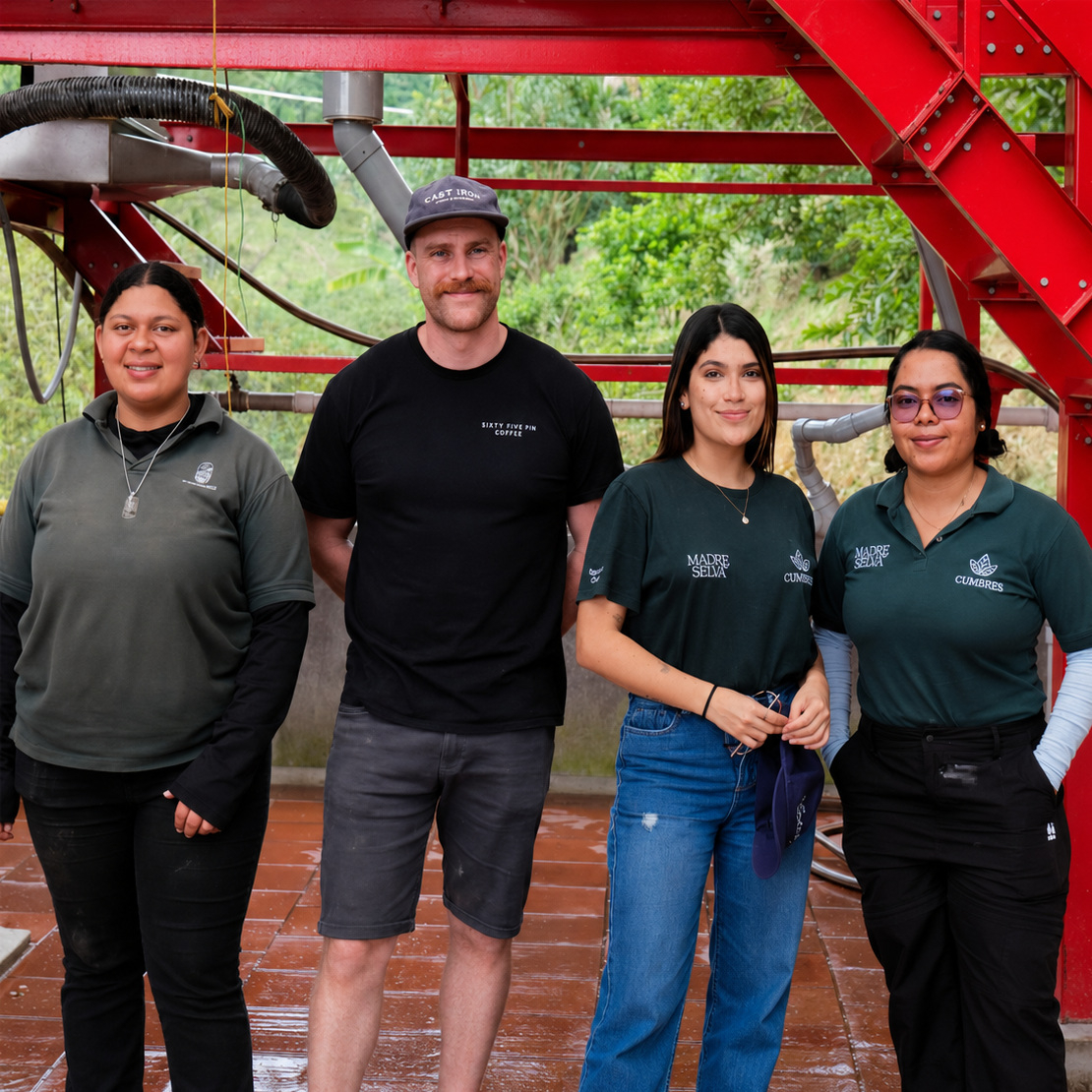
This coffee comes from CUMBRES, a Colombian producer and exporter rooted in the coffee-growing traditions of Antioquia. Managed by the fourth generation of a coffee-farming family, CUMBRES works directly with producers across several regions of Colombia, combining coffees from its own farms with carefully selected lots sourced through long-term partnerships.
This particular decaffeinated lot originates from Nariño, a renowned coffee-producing region in southern Colombia along the Andes Mountains. Here, coffee is cultivated at elevations between 1,800 and 2,100 meters above sea level. The combination of high altitude, volcanic soils, and significant temperature variations between day and night slows the ripening of the cherries, allowing the beans to develop exceptional density and complexity.
The result is a refined and expressive cup, characterized by vibrant acidity, layered sweetness, and a well-structured profile that reflects the unique terroir of Nariño while preserving all the character of the coffee despite the decaffeination process.
CATURRA
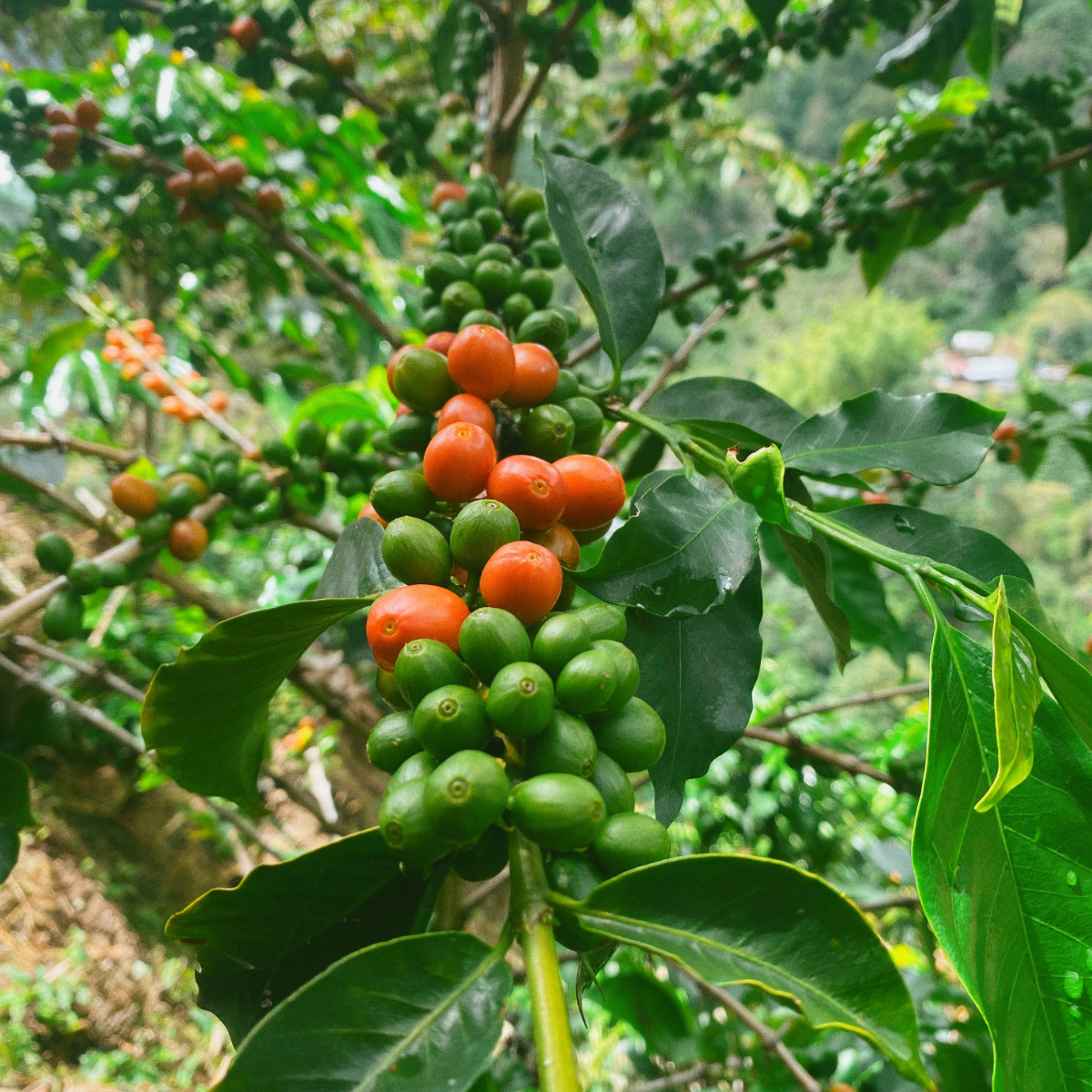
Caturra is a natural mutation of the Bourbon variety, first discovered in Brazil in the early 20th century. Its compact size allows for higher planting density and easier farm management, while maintaining the excellent cup quality associated with Bourbon.
Over the years, Caturra became one of the most important coffee varieties in Latin America, particularly in Colombia and Central America, where it has been widely cultivated for its productivity and balanced flavor profile. In the cup, Caturra is often associated with bright acidity, pronounced sweetness, and a clean, well-structured character.
Its genetic qualities have also made it an important parent variety in several modern cultivars developed for improved disease resistance and farm performance.
CASTILLO
Castillo is named after the researcher Jamie Castillo, who helped Cenicafe, Colombia’s coffee research centre, develop the varietal in 2005.
It was designed as an improvement on the Colombia variety. It is resistant to leaf rust (roya) and has quickly become the most planted coffee in Colombia. It is high-yield, resistant to leaf rust and other prevalent diseases and its smaller size allows for greater planting density.
COLOMBIA
The Colombia variety was developed by Colombia's national coffee research center, Cenicafé, and officially released in 1982. Created by crossing Caturra with the disease-resistant Timor Hybrid, it was designed to combine excellent cup quality, high productivity, and resistance to coffee leaf rust.
Its introduction marked a significant step forward for Colombian coffee farming, helping producers maintain healthy and productive plantations while preserving the sensory characteristics for which Colombian coffees are known. In the cup, Colombia varieties often display bright acidity, balanced sweetness, and a clean, approachable profile, making them well suited to a wide range of growing regions and processing methods.
Today, the Colombia variety remains one of the most important cultivars in the country's coffee sector and has served as the foundation for several newer disease-resistant varieties.
This coffee is decaffeinated using Ethyl Acetate (EA), a naturally occurring compound commonly derived from sugarcane. Because Ethyl Acetate is also found in many fruits, this method is often known as the Sugar Cane Decaf Process.
The process begins by gently steaming and soaking the green coffee beans in water, allowing their cellular structure to expand. Ethyl Acetate is then introduced, selectively bonding with and removing the caffeine molecules while leaving most of the coffee's flavor compounds intact. Once the desired caffeine level is reached, the beans are thoroughly rinsed with water to remove any remaining Ethyl Acetate and then carefully dried back to their original moisture content.
This gentle and natural decaffeination method helps preserve the coffee's intrinsic characteristics, resulting in a clean, sweet, and well-balanced cup that retains the origin's unique flavors without the off-notes sometimes associated with other decaffeination processes.