 Cart
(0)
Cart
(0)





Guatemala
Cup Notes: Brownies, Green Apple, Brown Sugar
A rich, sweet cup with brownie and brown sugar notes, balanced by a crisp green apple acidity. Smooth and rounded, with a clean finish and a refreshing touch of fruit.
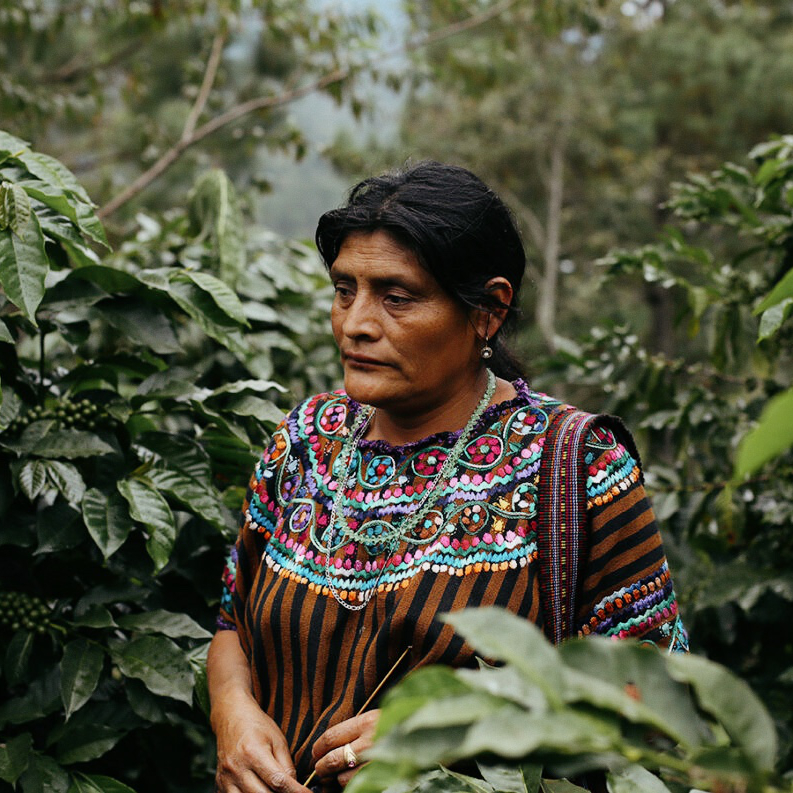
La Morena is a coffee that celebrates the dedication and resilience of women coffee farmers in Guatemala, where coffee production has traditionally been a male-dominated industry.
Suggested for espresso and filter
when we roast
We freshly roast to order all coffees on Monday, Wednesday and Friday (excluding national holidays), and ship the same day! Cut-off time is 11:59pm (UTC+1) of the day before the roast day. *We only ship whole beans*
La Morena is a coffee that celebrates the dedication and resilience of women coffee farmers in Guatemala, where coffee production has traditionally been a male-dominated industry. While women provide much of the labor on coffee farms, they often face limited access to land, credit, education, and other essential resources, making it harder for them to grow successful businesses.
This coffee comes from Huehuetenango, one of Guatemala's most renowned coffee-growing regions. As the country's highest and driest non-volcanic region, its unique climate and high elevations create ideal conditions for producing coffees with exceptional sweetness, complexity, and clarity.
Produced exclusively by female farmers, La Morena is also part of the Volcafe Way sustainability program. Through technical training and support, these producers have improved both the quality of their coffee and the productivity of their farms, enabling them to earn higher incomes while building more sustainable businesses.
Beyond coffee, Volcafe's sourcing partner Peter Schoenfeld collaborates with the Wakami Foundation, a local organization dedicated to empowering Guatemalan women through entrepreneurship and skills training. Together, they help create new economic opportunities, transforming cycles of poverty into lasting prosperity.
Every cup of La Morena is not only an expression of Guatemala's outstanding terroir, but also a celebration of the women shaping the future of coffee.
CATURRA is a natural mutation of Bourbon, discovered in Minas Gerais, Brazil, between 1915 and 1918. Its name comes from the Guarani word for "small," referring to the single-gene mutation responsible for its compact growth.
First studied by the Instituto Agronômico (IAC) in 1937, Caturra became valued for its short stature, dense branching, and high productivity, allowing closer planting and increased yields.
Although never officially released in Brazil, it spread throughout Central America, becoming one of the region's most important varieties for both yield and cup quality. It later served as a parent of the rust-resistant Castillo variety and the Catimor group, combining excellent productivity with improved disease resistance.
BOURBON
Bourbon is one of the world's most renowned Arabica varieties, prized for its exceptional cup quality. Originally brought from Yemen to Bourbon Island (now La Réunion) by French missionaries in the early 1700s, it spread to Latin America during the 19th century, reaching Brazil around 1860 before expanding throughout Central and South America.
A tall-growing variety, Bourbon is known for its moderate yields—around 20–30% higher than Typica—but is generally susceptible to diseases and pests. It thrives at elevations between 1,100 and 2,000 meters above sea level.
Although many farms have replaced Bourbon with its descendants, such as Caturra, Catuai, and Mundo Novo, it is still cultivated in countries including El Salvador, Guatemala, Honduras, and Peru, where it continues to be valued for its outstanding cup quality.
CATUAI
Catuai is a hybrid Arabica variety developed in Brazil in the 1940s, resulting from a cross between Mundo Novo and Caturra. Known for its disease resistance and high productivity, it is a favourite among Brazilian farmers. The compact plants facilitate manual harvesting and farm management.
Catuai’s flavour profile is generally balanced, with notes of toasted nuts and chocolate, complemented by soft sweetness and a gentle acidity, making it versatile and approachable.
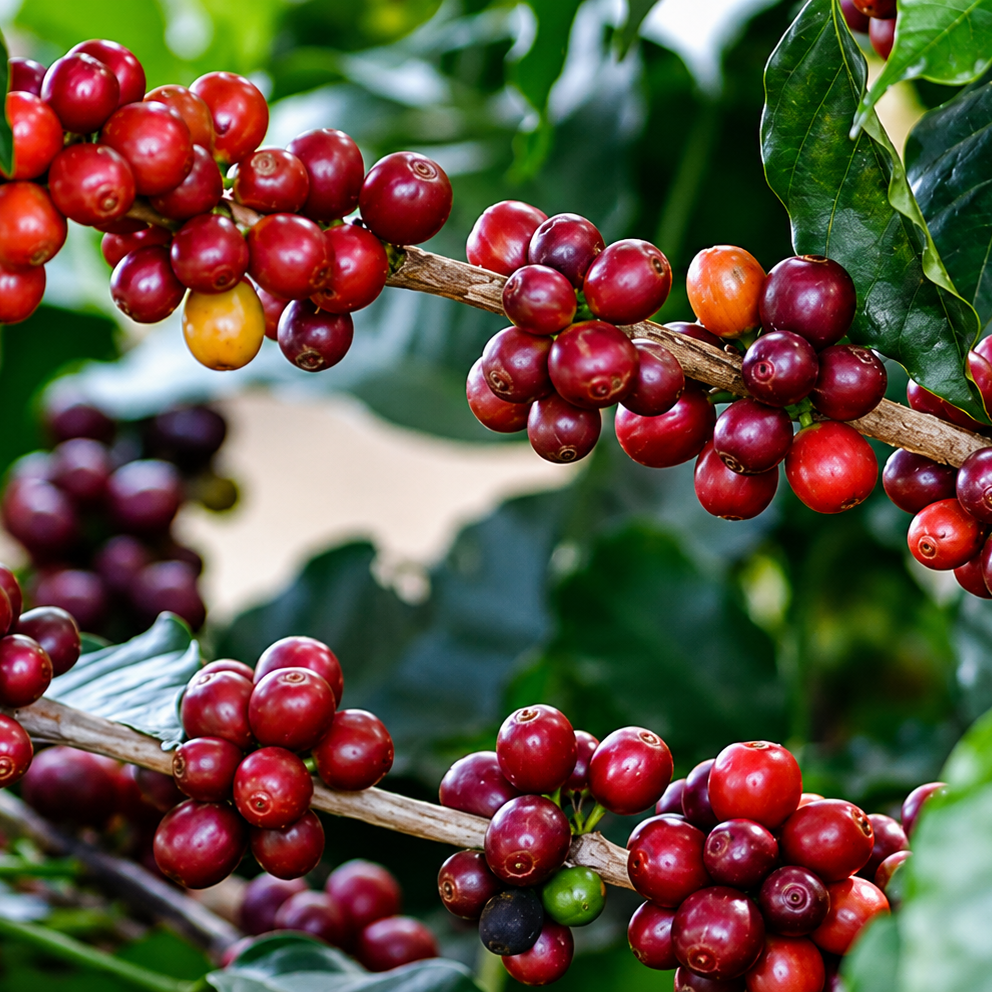
Only perfectly ripe coffee cherries are selectively hand-picked before being delivered to the wet mill, where they are carefully sorted and depulped shortly after harvest. The beans, still covered in their sticky layer of mucilage, undergo a controlled fermentation to naturally break down the remaining fruit sugars. Once fermentation is complete, the parchment coffee is thoroughly washed with clean water, resulting in the bright, transparent cup profile for which Guatemalan washed coffees are renowned.
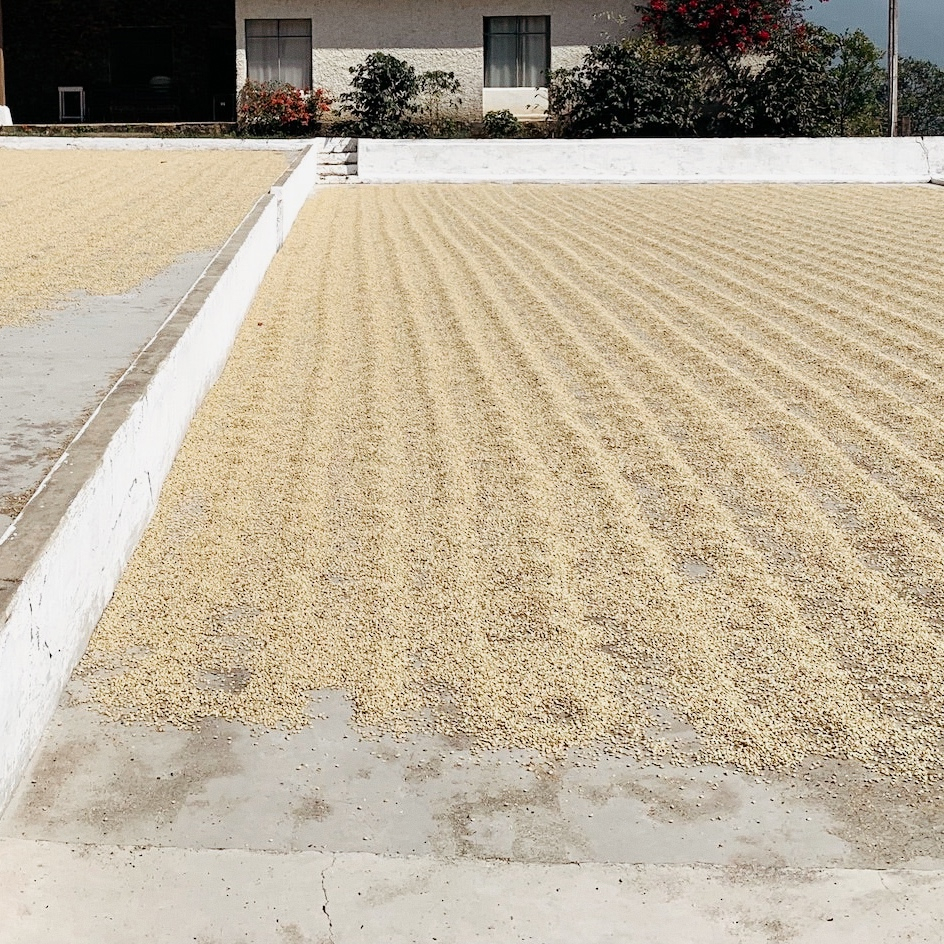
The coffee is then slowly sun-dried until it reaches the ideal moisture content for storage and export. During drying, the parchment is regularly turned to ensure even airflow and moisture loss, protecting the beans from defects while preserving their sweetness, clarity, and vibrant acidity. Once fully dried, the coffee is rested in parchment before milling, grading, and preparing for shipment.