 Cart
(0)
Cart
(0)





India
Cup Notes: Marzipan, Mango, Orange Candy
This coffee presents a vibrant and expressive cup with a fruit-forward profile and a refined, wine-like complexity. Notes of ripe mango and orange candy bring a bright, juicy character, while a delicate marzipan sweetness adds roundness and depth.
Suggested for espresso and filter
when we roast
We freshly roast to order all coffees on Monday, Wednesday and Friday (excluding national holidays), and ship the same day! Cut-off time is 11:59pm (UTC+1) of the day before the roast day. *We only ship whole beans*
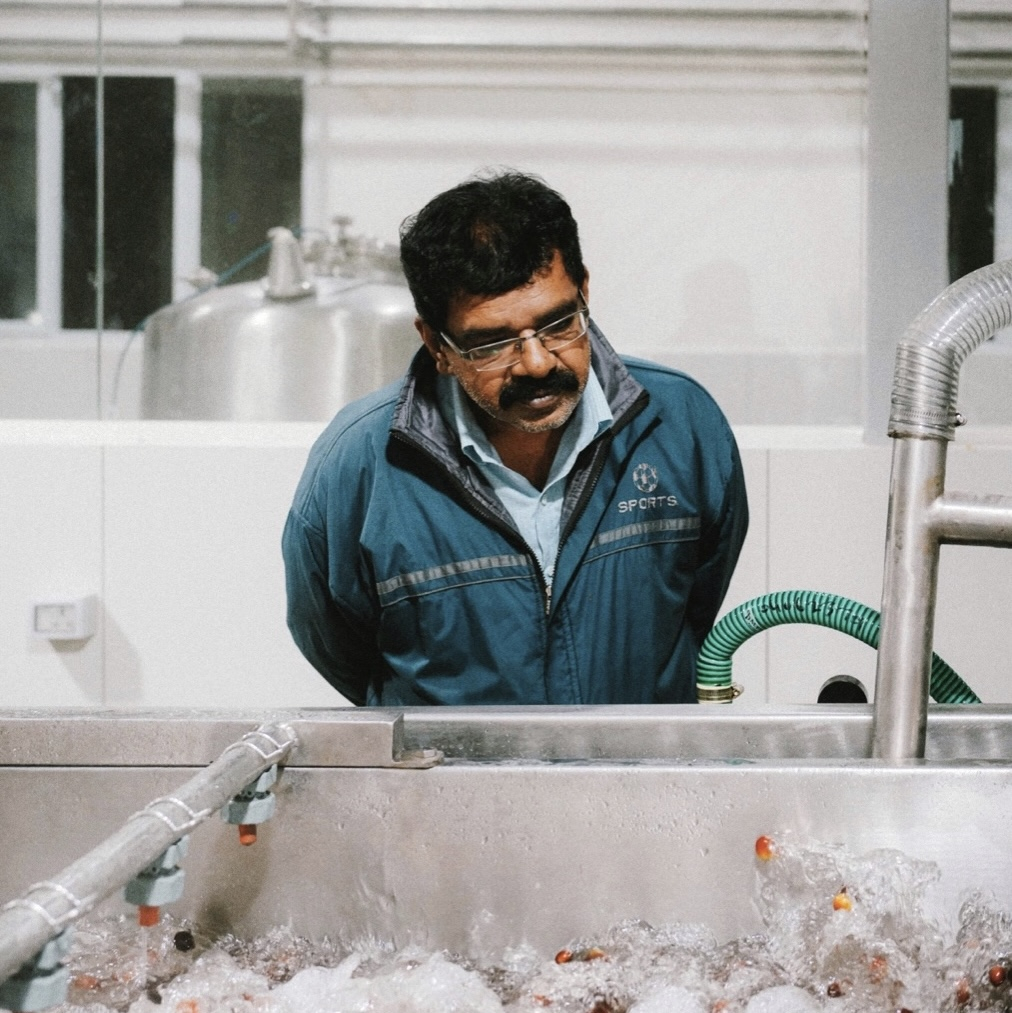
This coffee comes from Ratnagiri Estate, a historic farm established in 1920 and managed by Ashok Patre, whose family has cultivated coffee here for three generations. The name Ratnagiri means “Pearl Mountain” in Hindi, referring to the silver oak canopy that shades the plantation.
Ashok Patre is known for his progressive approach to coffee cultivation and processing. Inspired by international coffee practices, he has expanded well beyond traditional Indian methods. On the farm, cherries are carefully monitored before harvest, including Brix measurements to ensure optimal ripeness.
To support this work, the farm has invested significantly in laboratory equipment, enabling controlled experimentation and greater precision in processing. Techniques such as anaerobic fermentation, carbonic maceration, and inoculation with selected lab-grown yeast and bacterial cultures are used to explore new flavor expressions while maintaining consistency and quality.
The farm follows a biodynamic-oriented approach and holds Rainforest Alliance Certification. Soil health is monitored through regular analyses, and organic amendments are applied when needed. Practices such as the use of ionic seawater and seaweed extracts help strengthen plant immunity and encourage higher sugar development in the cherries.
The estate itself is a lush, shaded environment with three layers of canopy cover, supporting an exceptional level of biodiversity. More than 48 bird species have been recorded on the property, along with wildlife such as monkeys, leopards, wild boar, tigers, mongoose, and occasionally elephants. This vibrant ecosystem requires a farming philosophy that prioritizes ecological balance and harmony with nature, making Ratnagiri one of the most innovative and respected coffee farms in India.
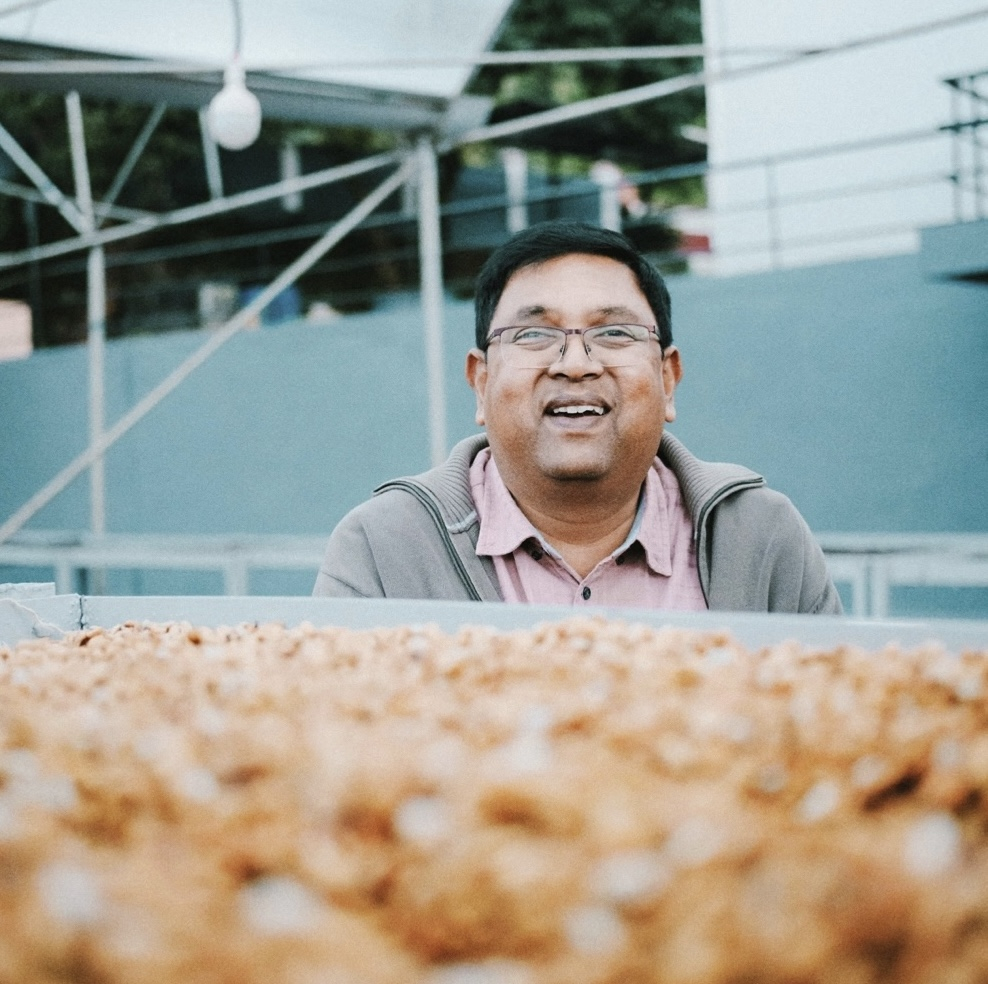
Hemavathi is a relatively rare Arabica coffee cultivar developed in India, likely through breeding programs at the Central Coffee Research Institute (CCRI). The cultivar was created as part of efforts to improve tolerance to coffee leaf rust, one of the main diseases affecting Arabica coffee; Good productivity and yield stability; Adaptation to shaded cultivation systems, which are common in traditional Indian coffee farms; Suitability for humid, monsoon-influenced climates.
Because of these characteristics, Hemavathi represents part of the ongoing effort within Indian coffee research to balance plant health, agricultural sustainability, and crop performance under challenging environmental conditions.
Hemavathi is generally considered to be a hybrid derived from selected Arabica breeding lines. Indian breeding programs have traditionally relied on varieties such as Kent, S.795, and other locally adapted lines, which have served as the genetic base for several cultivars developed in the country.
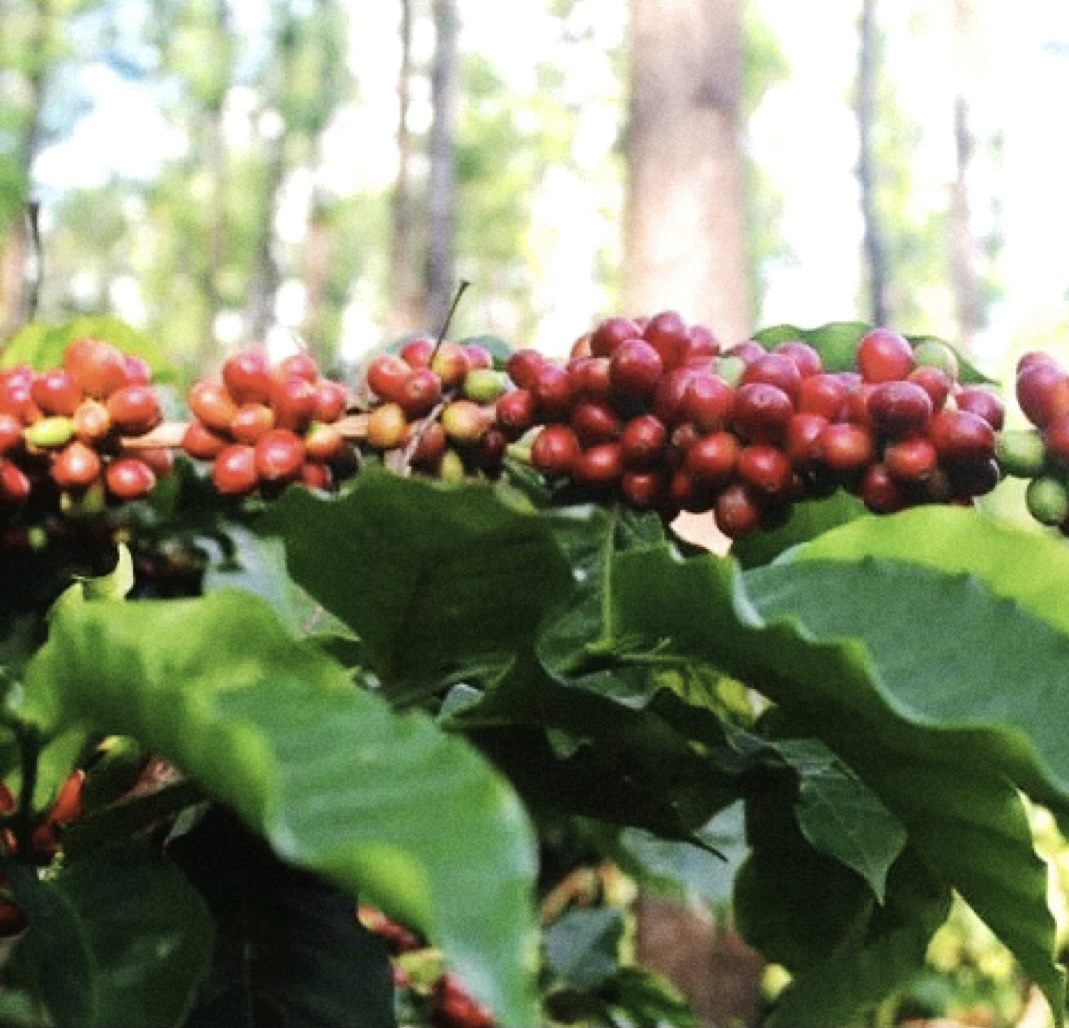
This lot underwent a 96-hour extended carbonic maceration natural process using Hemavathi cherries harvested at a Brix level of 25.9, indicating high sugar content and optimal ripeness.
After harvest, the cherries were carefully sorted and floaters were removed before the coffee was transferred into bio-fermenters. The tanks were inoculated with a blend of selected lab-grown microbial cultures to guide and control the fermentation.
The fermenters were then purged with carbon dioxide, creating an oxygen-free environment that allows the carbonic maceration process to take place. The cherries remained sealed in this controlled atmosphere for 96 hours.
Once fermentation was completed, the cherries were transferred directly to raised drying beds, where they were slowly dried for 31 days with constant stirring to ensure uniform moisture reduction and stable drying.